Skip to content
India Wealth & Lifestyle Report

The Experience
Economy

How India's HNI and UHNI lifestyle spend is broadening decisively — from real estate and automobiles into weddings, watches, wellness, private aviation, members' clubs and passion assets.

2026 · Lifestyle
Passion & Experience Assets
NU X WEALTH
July 2026

Overview

The lifestyle economy,
ascendant

India's luxury story is no longer about what a family owns, but about how it lives. The lifestyle economy is broadening from property and cars into experience-led categories — the ~$130bn wedding economy, a fast-formalising luxury-watch market, private aviation, members' clubs and the wellness-and-longevity frontier are the fastest-moving arenas of 2026. The structural tailwind is the India–EFTA trade deal, in force from October 2025, which glides Swiss-watch import duties to zero by 2031 and formalises what was once grey-market spend — while Bain projects India's personal-luxury market will reach $85–90bn by 2030.

$130bn
Weddings
The largest single lifestyle category — roughly double the US market and, per CAIT, India's fourth-largest industry, bigger than aviation.
0%
Watch Duty by 2031
The clearest formalisation story: TEPA takes Swiss-watch duties from 22% to zero by January 2031, on a market already growing 11–12% a year.
121
Private Jets
India's charter fleet is now the largest in Asia-Pacific, ahead of Australia, after 53.2% growth between 2023 and 2025.
83%
Longevity Interest
Wellness and longevity are the emerging frontier — a $19–28bn wellness-tourism market, with 83% of Indians drawn to longevity retreats.
17.8%
Clubs CAGR
Members' clubs, concierge and second homes complete the ecosystem — India is the second-fastest concierge market globally, behind only China.
01
The Table

Fine Dining & Culinary Luxury

No domestic Michelin Guide — yet a global moment for Indian cuisine, and a chef-led fine-dining scene coming of age at home.

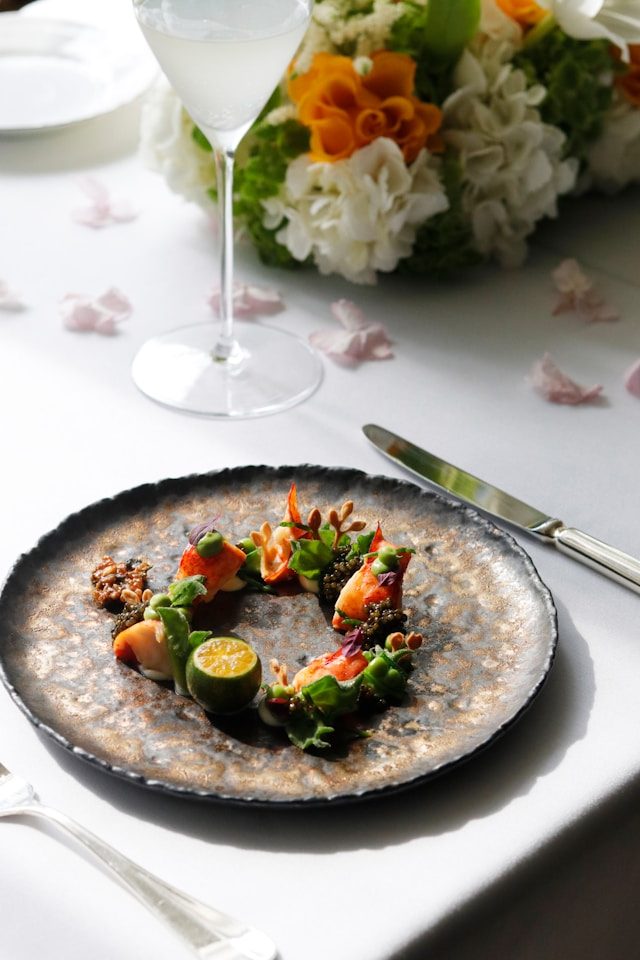
Plated fine-dining course at a luxury table setting
Plate — The tasting-menu format, ascendant

India still has no domestic Michelin Guide and no starred restaurants on Indian soil as of 2026. Yet Indian cuisine is having its global moment: Dubai's Trèsind Studio became the first Indian restaurant ever to earn three Michelin stars in February 2026, and London's Ambassadors Clubhouse earned a star the same year.

At home, the scene is defined by chef-led independents and hotel flagships. The landmark 2026 opening is Nisaba — Manish Mehrotra's first independent restaurant, inside the Humayun's Tomb Museum Complex in Delhi. Indian Accent remains the benchmark, with an 18-seat private room and a 10-seat "Centurion" room built around an interactive show kitchen.

0
Michelin-starred restaurants on Indian soil, 2026
3
Trèsind Studio, Dubai — first Indian restaurant ever
Jan '26
Nisaba opens at Humayun's Tomb complex, Delhi
18
Seats in Indian Accent's private dining room

The HNI trends are consistent: the rise of the chef's tasting menu and multi-course formats; private dining rooms and private-chef bookings; wine pairing and sommelier culture migrating into fine dining and upscale bars; hyper-local, seasonal sourcing; and the celebrity-chef signature restaurant. Mumbai's Masque pioneered the tasting-menu-and-pop-up model, while Bandra Born exemplifies the pop-up-driven creativity now shaping the top end. Culinary Culture's #Next30 list and the Best Chef Awards are increasingly cited as prestige markers.

02
The Big Fat Economy

Weddings

The single largest lifestyle category in India — a ~$130bn economy shifting from scale to intimate, personalised luxury.

Indian wedding couture — sherwani and bridal lehenga amid floral installation
Couture — Intimate luxury, multi-day

India's wedding industry is valued at roughly ₹10.79 lakh crore (~$130bn) — nearly double the US market and, per CAIT, the country's fourth-largest industry, bigger than aviation. High-net-worth families spend $2m–$15m on a single wedding; 9% of weddings now carry budgets above ₹1 crore, and over 60% of those are destination affairs.

Average spend rose ~8% in 2025 to ~₹39.5 lakh, with destination weddings averaging ~₹58 lakh and accounting for 55–60% of premium enquiries. The defining shift is toward intimate luxury — 200–300 guests across multiple days — as the traditional 800-guest single-day format recedes.

$130bn
Total wedding industry (~₹10.79 lakh crore)
₹39.5L
Average spend, 2025 — up ~8% year-on-year
55–60%
Destination share of premium enquiries
14.8%
Destination-wedding market CAGR to 2033

The destination market alone was estimated at $16.25bn in 2024, projected to reach $55.39bn by 2033. Domestic favourites remain Goa, Udaipur, Jaipur, Kerala and Rajasthan, with hill and mountain weddings the fastest-growing sub-segment; Thailand, the UAE and Bali anchor the ultra-luxury international tier. CAIT projected the ~45-day season from November 2025 would generate ₹6.5 lakh crore in activity across some 4.6 million weddings — close to 1.91% of India's annual GDP. Personalisation — thematic decor, handcrafted menus — rose 15–20% in 2025, even as record-high gold prices pressured the jewellery segment and drove a wave of gold recycling.

03
The Longevity Turn

Wellness & Luxury Health

Longevity is becoming "a luxury within a luxury" — a recurring, scheduled spend rather than a one-off indulgence.

Infinity pool overlooking the ocean at a luxury wellness retreat
Retreat — The infinity edge, where wellness meets the horizon
$19–28bn
India wellness-tourism market (definition-dependent)
83%
Of Indians interested in longevity-focused retreats
7th
India's rank among global wellness-tourism markets
$8.7bn
Inbound medical tourism, 2025 → $16.2bn by 2030

India's wellness-tourism market is estimated between $19.43bn (2024) and $27.92bn (2025) depending on definition, rising toward $38bn by 2030 and ranking India seventh worldwide. The frontier is longevity: 83% of Indians express interest in longevity retreats, and treatments from cryotherapy and red-light therapy to stem-cell interventions and IV drips are gaining traction. As one operator puts it, longevity has become "a new luxury within a luxury," with clients now booking retreats annually or biennially.

Domestic flagships anchor the category: Ananda in the Himalayas — a 100-acre Maharaja's palace estate with a 25,000 sq ft spa, 24 treatment rooms and 80+ therapies — alongside Six Senses Vana in Dehradun and SOUKYA in Bengaluru. Outbound, Indian HNIs travel to SHA Wellness in Spain (its Advanced Longevity Program starts from ~€7,500 for seven days, excluding stay), Clinique La Prairie in Switzerland, Amanpuri in Phuket and RoseBar in Ibiza. Inbound medical tourism, meanwhile, drew some 507,244 foreign patients in 2025.

04
Formalisation

Watches, Jewellery
& Fine Collectibles

The clearest "grey-to-formal" story in Indian luxury — and a sober reminder that scarcity no longer guarantees returns.

Luxury Swiss wristwatch photographed on alpine rock
Horology — India, the fastest-growing significant Swiss-watch market
$1.7bn
India luxury-watch market, 2025 → $2.9bn by 2034
+25.2%
Swiss watch exports to India, 2024 (while China fell)
~70%
Luxury/high-end share of the market (FY25, from ~48%)
11–17%
Of UHNWI wealth in passion assets (Knight Frank)

Swiss watch exports to India rose 25.2% in 2024 and a further 12.7% in the first half of 2025 — the fastest-growing significant market anywhere, even as China contracted sharply. Under TEPA, duties fell to 15.71% in January 2026 and glide to zero by January 2031, formalising spend that once leaked to overseas and grey channels. Boutique openings followed — Breitling in Bengaluru, Rolex and Franck Muller at DLF Emporio — while Tata's ReLoved and Second Movement are formalising the pre-owned market. Mumbai now hosts more billionaires than Beijing.

In jewellery, HNI taste is moving beyond traditional gold toward lab-grown diamonds (now accepted for bridal), coloured gemstones — tanzanite is the standout for 2026, alongside an emerald revival — demi-fine everyday pieces and heritage Polki-Kundan. But the investment case demands candour: the Knight Frank Luxury Investment Index fell 3.3% in 2024, a second straight decline, with fine art down 18.3%, wine down 9.1% and rare whisky down 9.0%. For Indian buyers, the "joy of ownership" now outranks returns — and the next generation's top aspiration is a luxury car, not a collectible.

05
The Pour

Wine & Spirits

The world's largest whisky market by volume — premiumising fast, and increasingly proud of what it makes at home.

#1
India — largest whisky market in the world by volume
~53%
Of India's single-malt sales now Indian-made
$30bn
India's overall spirits market, 2025
<0.1L
Wine per-capita per year (vs 20+ in France)

India's whisky market was ~$2.39bn in 2024 and is projected to grow at 7.3% a year to $4.52bn by 2033. The striking shift is domestic pride: Indian single malts accounted for roughly 53% of single-malt sales in India in 2023, overtaking global brands. Amrut, Paul John (320+ international awards), Rampur and Diageo's Godawan lead the charge — Godawan 100 was named "World's Best Single Malt" at the 2024 London Spirits Competition — while premium-and-above spirits grew 8% in the first half of 2025.

Wine remains small but is premiumising fast, with estimates ranging from ~$229m to ~$531m for essentially the same year and imports dominating the premium segment. Per-capita consumption under 0.1 litre a year — against 20-plus in France — signals enormous headroom. Domestic producers are moving upmarket: Grover Zampa's limited-edition, 36-month oak-aged Essence De Cabernet Sauvignon is emblematic, while FTA negotiations with the EU and Australia could eventually ease the ~150% import duties that still shape the category.

06
Belonging

Private Clubs &
Social Infrastructure

From decades-long golf waitlists to a new wave of members' clubs, access is the currency of the Indian elite.

Golfer mid-swing on a coastal championship course
The Fairway — Where a 30-year waitlist is the point

The private members' club industry is growing at a 17.8% CAGR — from ₹324 crore in 2020 to ₹576 crore in 2024, and projected to reach ₹941 crore by 2027 — with registered membership climbing to ~11,200 and Mumbai's western belt accounting for ~42.5% of the market.

Golf remains the ultimate closed door. The Delhi Golf Club carries a waiting period widely reported at 30-plus years; Bombay Presidency Golf Club membership runs ~₹1 crore and is effectively shut to newcomers; DLF Golf & Country Club — India's top-ranked course — offers lifetime memberships in the ₹15–20 lakh range.

Soho House MumbaiThe only Indian outpost — for nowMembership from ~₹45,500/quarter, with all-house access at ~₹3.1–6 lakh/year. Delhi (Mehrauli) and a South Mumbai house are announced; digital "Cities Without Houses" access has reached seven Indian cities.
The Quorum3,000+ members across three citiesOne-time joining of ₹4–5.5 lakh and ~₹1.5 lakh annual; Nikhil Kamath's Gruhas took a 5% stake in 2024.
The Bay Club, MumbaiAmbani-owned, Oberoi-managed, invitation-only120,000 sq ft in BKC, with fees genuinely undisclosed — the apex of Indian club exclusivity.
PoloA royal-and-corporate revivalIn a landmark October 2025 result, India beat world No.1 Argentina 10–9 to win the KogniVera International Polo Cup at Jaipur. Patrons span the Jindals and the late Sunjay Kapur's Sona Polo — though the sport remains under-funded versus Argentina.
07
The Second Address

Second Homes &
Holiday Real Estate

Increasingly underwritten as yielding assets — personal use, rental income and appreciation in one line-item.

Aerial view of a luxury yacht cutting through turquoise water
Escape — The leisure lifestyle that second homes are built to serve
$3.2bn
India's second-home market
20–23%
Annual growth (CAGR)
+13.8%
Alibaug values in 2025 (~₹9,860/sq ft)
5–6%
Typical rental yields on prime second homes

The market splits west-heavy: ~48% across Alibaug, Sindhudurg and Goa, ~29% north (Kasauli, Shimla, Rishikesh), the rest south and east. Alibaug — Mumbai's playground, now bridged by the Atal Setu and soon served by the Navi Mumbai airport — saw values rise 13.8% in 2025, with over 13% of homes priced above ₹3 crore and celebrity buyers from Amitabh Bachchan to Deepika Padukone and Ranveer Singh. Lonavala runs at ~₹12,011/sq ft with over half its homes above ₹3 crore, while Goa's ultra-luxury villas fetch ₹5–25 crore.

The behavioural change matters more than the geography: buyers increasingly treat a second home as a structured investment — personal use, plus rental yield, plus appreciation — rather than pure consumption. Branded, serviced and managed residences are becoming central, and farmhouse belts near Hyderabad and Mumbai remain a distinct HNI category tied to land appreciation.

08
Wheels Up

Private Aviation

A structural re-rating — India now flies the largest charter fleet in Asia-Pacific, and access has beaten ownership.

Private turboprop jet in a hangar at golden hour
Hangar — 121 jets, and counting

India's charter fleet grew 53.2% between 2023 and 2025 to 121 jets — now the largest in Asia-Pacific, ahead of Australia's 107. The country counts 550-plus private aircraft overall, with business aviation making up 8–10% of a $14.78bn sector, and large-and-medium cabins accounting for 57.9% of the charter fleet.

The operator landscape is consolidating around scale players — Adani's Karnavati Aviation (now the third-largest APAC charter operator after adding four Pilatus PC-24s), Phenix Jet, VSR Ventures, JetSetGo and Taj Air. Martin Consulting projects ~700 charter and business aircraft by 2029.

121
Charter jets — largest fleet in Asia-Pacific
+53.2%
Fleet growth, 2023–2025
550+
Private aircraft overall (jets, turboprops, helicopters)
~700
Projected charter & business aircraft by 2029

Tellingly, fractional ownership has never taken off in India — two decades of requests have produced no enabling policy — so charter and membership models dominate over outright ownership. The helicopter fleet is roughly twice the size of the business-jet fleet, driven by offshore oil-and-gas and pilgrimage heli-taxi routes to Kedarnath, Badrinath and Amarnath.

09
The Storefront

Luxury Retail & Fashion

The global houses are finally building in India — and a Parisian grand magasin has planted its flag in Mumbai.

Ornate stained-glass dome of a grand luxury department store
Grand Magasin — Galeries Lafayette, now in India

India's personal-luxury market — variously put at ~$17bn in 2024 — is projected by Bain to reach $85–90bn by 2030, with Deloitte's more bullish case running to $200bn at ~20% annual growth. The landmark 2025 moment: Galeries Lafayette opened its first India flagship in Mumbai's Fort district, with a Delhi store to follow — a debut its executive chairman called "a defining moment."

Reliance's Jio World Plaza now anchors the top tier alongside DLF Emporio and UB City, while a wave of 2025 entries — Maje, COS, Bershka, Judith Leiber and more — deepened the mid-luxury field. Notable absences remain: Patek Philippe and Loro Piana flagships have yet to arrive, and Louis Vuitton still counts only three India stores.

$85–90bn
Personal-luxury market by 2030 (Bain)
$17bn
Estimated market size, 2024
Nov '25
Galeries Lafayette opens its first India flagship
12%
Annual growth in personal luxury (Euromonitor)
10
The Invisible Layer

Concierge &
Lifestyle Management

For UHNI families, a dedicated lifestyle layer has moved from indulgence to table-stakes.

$16.1bn
Global lifestyle-concierge market, 2025 → $24.3bn by 2030
9.5%
India CAGR, 2025–2035
2nd
India's global growth rank — behind only China

The post-Covid tilt toward "experiences over possessions" has pushed India up the concierge league table to second globally, behind only China. The field is maturing quickly: Quintessentially has run a New Delhi office since 2010; RedBeryl spans 85 Indian cities and 25 international destinations with its Lifestyle Card; Indulge and CribLife target family-office-grade support; and developers are folding concierge into the home itself, as with Lodha's Saint Amand serving residents across Mumbai and London.

Models range from subscription memberships and on-demand booking to residence-integrated offerings — the connective tissue that lets a UHNI family orchestrate the rest of the lifestyle stack from a single point of contact.

11
Trophy Assets

Sports & Leisure

Where passion, scarcity and influence — not cash yield — set the price.

$1.78bn
Royal Challengers Bengaluru — most valuable IPL franchise ever
$1.63bn
Rajasthan Royals valuation
₹484cr
BCCI central media-pool payment per franchise
28
Events on the 2025 Professional Golf Tour of India

The IPL is India's marquee passion-plus-investment asset, and franchise valuations re-rated dramatically ahead of the 2026 season: Royal Challengers Bengaluru sold for ~$1.78bn (~₹16,600 crore) to an Aditya Birla-led consortium — the most valuable franchise ever — with Rajasthan Royals at ~$1.63bn and Gujarat Titans around ₹7,500 crore. Yet the economics are candid: RCB posted a ₹140 crore profit on ₹550 crore of revenue in FY25, implying a cash return-on-investment below government-debt yields at these prices. Ownership here is driven by brand, scarcity and influence — not by cash returns.

Beyond cricket, corporate golf — the DLF Golf League, now in its fourth season — has become a genuine HNI networking arena atop a 28-event professional tour, while polo continues its royal-and-corporate revival despite structural under-funding.


The NU X WEALTH Lens

How we read it
for our clients

01
Position now
Frame second homes, watches and select collectibles as portfolio line-items, not just consumption. The data supports treating Alibaug, Lonavala and Goa second homes as yielding assets — 5–6% rental yields plus double-digit appreciation — but they should be underwritten like any illiquid alternative. On watches, the TEPA duty glide-path to zero by 2031 is a genuine cost tailwind; for clients, grey-market and overseas buying loses its arbitrage as domestic pricing formalises.
02
Near-term · the next 12 months
Build "access over ownership" into lifestyle planning. Jet charter and membership — rather than fractional or whole ownership, given the absence of enabling policy — and club memberships (Quorum, Soho House, BLVD) are the efficient way into the ecosystem. For UHNI families, a concierge or family-office lifestyle layer — RedBeryl, Quintessentially, or in-house — is increasingly table-stakes.
03
Strategic · a wealth-preservation lens
Passion assets are best understood as enjoyment first. The Knight Frank Luxury Investment Index fell 3.3% in 2024, with steep declines in art (-18.3%), wine (-9.1%) and whisky (-9.0%) — evidence that scarcity no longer guarantees returns. Passion spend belongs to a defined discretionary bucket, kept distinct from the core portfolio.

Methodology & Caveats

  • Market-sizing varies widely by source and definition. The wedding market ($75bn vs $130bn), wine ($229m to $531m for the same year), luxury goods ($17bn vs $85–200bn) and wellness tourism ($19bn vs $28bn) all show wide ranges; figures are directional and should be read with their source.
  • Several data points are projections, not actuals — the private-club ₹941 crore (2027) figure and 17.8% CAGR both trace to a single 2024 study, and most "by 2030/2033" figures are analyst forecasts.
  • Where possible, figures are anchored to named primary sources — Knight Frank, IMARC, Mordor, Asian Sky Group, WedMeGood, Grand View Research, Deloitte, Bain, the Federation of the Swiss Watch Industry, CAIT and the Ministry of Tourism.
  • India has no Michelin Guide as of 2026; Indian chefs hold stars only abroad. Club fees vary by tier and year, and Bay Club fees are genuinely undisclosed.
References

Sources

Wealth & Investment

Knight Frank, The Wealth Report 2025/2026 (Luxury Investment Index; Next-Gen Survey; India UHNWI data). Business Standard; India Business Trade; Business Today — passion-investment and KFLII coverage.

Weddings

Grand View Research (India Destination Wedding Market); WedMeGood Annual Wedding Industry Report 2025–26; Asianet Newsable; Business India (CAIT / The Economist); Today's Traveller (KPMG 2023); First Resort by Ramola Bachchan.

Fine Dining

MICHELIN Guide (Feb 2026); Wikipedia (Manish Mehrotra / Nisaba); Indian Retailer (celebrity chefs); Indian Accent.

Wellness & Medical Tourism

Forbes India; Travel And Tour World; Mordor Intelligence (wellness & medical tourism); Robb Report India; InsightsIAS / PIB; ORF; Ananda Spa.

Watches, Jewellery & Collectibles

IMARC Group; Deloitte (Swiss Watch Industry Study 2025 / Focus India); Federation of the Swiss Watch Industry (via Upstox); The Silent Luxury (TEPA); MarketBites; Natural Diamonds; Jewelspire.

Wine & Spirits

Restaurant India; The Spirits Business; Luxebook India; London Spirits Competition; IMARC Group; Technavio; The Drinks Business (Oct 2025).

Private Clubs, Golf & Polo

The Core / Signal Daily (Axon Developers 2024); Axon Developers; Soho House; Outlook Luxe; Robb Report India; Business Standard; Digit Insurance; BPGC; Delhi Golf Club; NewsOnAir (2025 KogniVera Polo Cup).

Second Homes

Data Insights Market ($3.2B second-home surge); Travel And Tour World; Ghar.tv; Lodha Group; Business Standard (villa economy, Jan 2026).

Private Aviation

Asian Sky Group (Charter Report 2025); Private Jet Card Comparisons (Dec 2025); The Core; Aviation World (Martin Consulting).

Luxury Retail

FashionUnited (Oct 2025); Images BoF; AOL/Reuters (Galeries Lafayette, Oct 2025); Outlook Money; Gulf News (Euromonitor).

Concierge

Future Market Insights; Dezerv; Quintessentially India; Namrata Kohli.

Sports Investments

Business Standard (IPL valuations, Mar 2026); CREX; Entrackr (IPL FY25 earnings); Wikipedia (2025 Professional Golf Tour of India).